
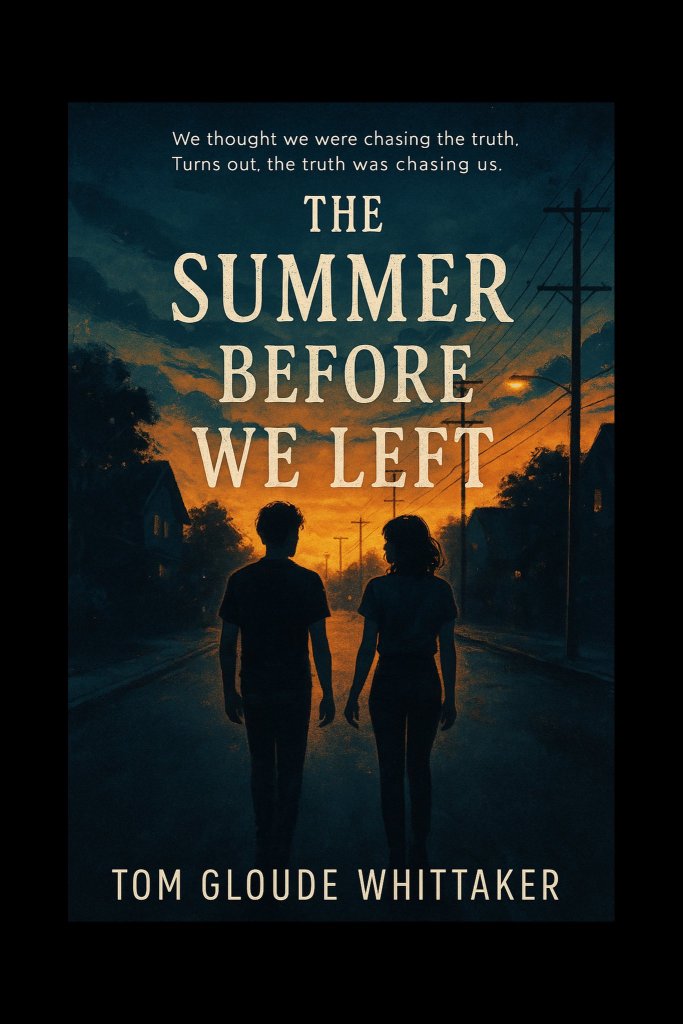
Chapter 1 from The Summer Before We Left
Available for pre-order on Amazon in Kindle now and paperback, hardcover, audiobook starting March 1, 2026.
Chapter 1
It Always Starts with the Wrong Guy
Milo | Tuesday, July 8th
***
Cart’s Gone. Nobody Cares.
Some mornings, the air just smells like giving up.
The golf cart barn reeked of mildew, spilled Red Bull, and the ghost of Gabe’s vape pen. Milo shoved the roll-up door open. It clattered upward in protest, summer heat spilling in like a warning.
Thirty-six carts stood in perfect rows, lined like comatose cattle. Everything in its place—except, of course, when it wasn’t.
He pulled the laminated checklist from his locker and started counting.
“Cart 7… fine.”
“Cart 8… smells like tequila and regret.”
“Cart 9… fine.”
“Cart 10, 11, 12, 13—”
He stopped.
Cart 14’s stall was empty.
The hook for its key was bare, like a missing tooth in a perfect smile—wrong in the quiet way you didn’t notice until it was all you could see.
Outside, fresh tire tracks veered off the path toward the woods. Not a trail. Not even a shortcut. Just… off-road. The tracks ended in grass. No cart.
It wasn’t ominous—exactly. Just wrong. The kind of wrong that usually got shrugged off… until it didn’t.
He could tell Walt, the Operations Director. Be responsible. But last time Milo had suggested reorganizing the key hooks by number, Walt grunted something about “tradition” and accused him of trying to unionize. And the security camera above the charger wall? Dead since spring. Walt always said no one checked footage anyway.
So—no. Let the afternoon shift figure it out.
Still, the stall’s emptiness itched at him.
The way everything here itched at him.
And he had no idea yet just how much it was about to scratch back.
***
Milo tossed the checklist onto the dented metal workbench, shoving in his earbuds. His podcast picked up mid-sentence:
“…you can’t talk about the Chicago skyline without mentioning cohesion—form following emotion, not just function…”
Exactly that.
The Form & Fury host sounded like a skyscraper had broken his heart once. Milo didn’t care about the voice; he cared about the rhythm—the way buildings made order from chaos. Columns didn’t lie. Rooflines didn’t ghost you.
The timecard wall caught his eye. Someone had taped up a crooked printout—June Employee of the Month—even though everyone knew Walt picked winners the same way he picked wine: at random, and by who pissed him off the least. Gabe had made the wall twice. Milo never had.
Not that he cared. Except maybe he did.
Last August, he’d covered three doubles in a week, trained two new hires, shown up early, stayed late, even fixed a mower cable himself. He’d overheard Trina say he was “one of the good ones.” And then the photo went up: some kid who lasted two weeks and bribed Walt with peach cobbler from his grandma.
Milo looked back at the empty stall for Cart 14. At the perfect rows of casket-like carts waiting for someone else to drive them.
If he stayed in Paxville, this was his future:
Half-functioning.
Half-seen.
Slowly rotting from the inside out.
One day, he’d design a building where nothing matched. Where every window broke a rule.
Something loud.
Something strange.
Something you couldn’t ignore.
Something that left a mark.
***
Generational Wealth (Canadian Quarter Edition).
Milo was halfway through spraying out Cart 31 when a golf ball-sized blob of mystery cheese oozed from under the seat and landed near his shoe.
He stared at it, hose in hand.
“Not even cheese-shaped,” he muttered. “Just… cheese-adjacent.”
Cart 31 had been flagged the day before for smelling like feet. Milo could confirm—the scent was somewhere between an old sock drawer and a gym bag funeral.
So far, he’d pulled out three empty Truly cans, a balled-up glove, and a damp monogrammed towel that was still warm.
He sprayed harder, lying on the ground to flush the space beneath the seat, watching suds flood the cart floor like a tiny tsunami of bad decisions.
Gabe leaned in the doorway, oblivious to the heat, Doritos in hand. “Yo, Michelangelo.”
Tank top. Backwards hat. Snack-size Doritos.
Gabe dressed like someone who hadn’t completed a task since sophomore year.
“You find something interesting or just hiding from Walt?” he grinned.
Milo turned down the water pressure.
“Just wondering what kind of monster leaves cheese in a golf cart in July.”
“Same ones who think tipping a buck is generous,” Gabe said, popping a Dorito like wisdom.
“Hey, Cart 14 was missing when I got in. That you?”
“Nope,” Gabe said. “Probably some 5 a.m. tee time Walt forgot to write down.”
He smirked. “Let’s hope that’s all it is—Walt would blow a gasket if a cart’s stolen.”
“Yeah, Walt thinks being GM makes him General Patton,” Milo deadpanned. “Except his war is against sunscreen, labor rights, and the entire teenage workforce.”
Gabe blinked, shrugged. “Whatever. Cart 14 sucks anyway—brake’s always sticking.”
He tossed another chip into his mouth. “Probably sent some trust-fund golfer into a sand trap.”
Charisma wasn’t Gabe’s skill—it was his substitute for everything else.
Milo dumped the Truly cans into the bin. One clattered to the floor and rolled under the workbench, like it was trying to escape too.
He’d just shoved his phone into his pocket when an entitled voice landed behind him—
“Hey, pal—you know where I can get one with the soft leather seats?”
Milo turned.
The man was in his sixties, tanned within an inch of his life, with a country-club haircut and khakis so aggressively pleated they looked reinforced.
“They’re all the same model, sir,” Milo said, tight-lipped.
The man frowned. “No, no, Gabe always gives me the one with softer seats. Ask around. I’m a regular.”
Milo nodded slowly. “Of course.”
He grabbed the cleanest cart available and slapped a fresh towel over the seat like it was garnish.
The man tossed a few coins into Milo’s palm and drove off with the confidence of someone who thought valet parking was a personality trait.
Milo looked down.
A Canadian quarter.
A nickel.
And a breath mint.
“Generational wealth,” he whispered. “Catch it.”
He wiped his hands, pulled out his phone, and opened the shared spreadsheet he and Noelle used for their escape fund, Chicago: GTFO Fund:
$0.30 from Lord Van Golfington
(Canadian quarter, nickel, breath mint)
Then he texted:
Milo:
big tip
almost enough 2 cover future skyline view
u bring the ramen
He tossed the mint into the trash, pocketed the coins, and moved to the next cart.
From the corner of his eye, a silver Lexus rolled into the loop.
Driver door opened.
A guy stepped out—older teen, maybe college. Tall, broad-shouldered. Sun-touched skin that probably burned easy. Red hair. Sunglasses. Walked like nothing impressed him, including this place.
Something about the way he moved made Milo’s pulse skip—a slow, measured pace, like he had nowhere to be but still owned the clock. It wasn’t just confidence. It was a kind of permission Milo didn’t recognize but wanted to understand.
He didn’t ask the valet for help.
He scanned the area like he already knew the layout—like he’d been briefed.
Hands in pockets, like whatever he needed, he already had.
Milo paused. Just a second too long.
The guy didn’t belong here—but somehow looked like he’d never been anywhere else.
Milo didn’t recognize him.
Then he went back to work.
He bent to grab a rag when a voice popped in beside him—sharp, casual, and way too close.
“Who’s that?”
Kenzi, one of the hostesses, stood at the edge of the doorway, sipping from a to-go cup and radiating break-time defiance.
“The redhead,” she added. “Walked in like he owns the joint.”
Milo blinked. “Kenzi, do you sneak up on everyone or just the ones with heart conditions?”
“Just you. You’re funnier when you’re startled.”
He turned toward the lot again. “Don’t know who he is yet.”
Kenzi tilted her head. “That walk says private school. That smirk says expelled.”
Milo didn’t answer. Couldn’t quite look away.
“If I catch you doodling his name in your cart logs, I’m staging an intervention.”
“I have restraint.”
“Since when?”
He rolled his eyes.
The guy disappeared behind the snack bar. When Milo turned back, Kenzi had vanished too—probably off to stalk the redhead.
He lifted the hose again—when a sharp voice cracked through the summer haze from outside:
“…you better watch it, you little shit—keep your mouth shut or you’re in for a world of hurt!”
Milo froze.
No answering voice. Just more venom, same tone.
“Hope you’re happy when I get you fired,” the man barked into his phone. “I swear to God—keep talking and I’ll ruin you.”
Milo crept to the side of the barn, staying half in shadow.
Trevor Wessex.
Same salmon-colored polo he wore three days a week, because no one had told him about colors that didn’t scream my dad owns a yacht dealership.
Phone pressed to his ear, pacing like he was trading futures instead of threatening someone.
Trevor wasn’t just a member—he and his crowd were what Milo and Noelle called the Amex Avengers. Daddy’s Black Card. No job ever earned. Always “networking.”
Their fearless leader?
Captain Dickhead himself—Trevor Wessex.
Milo heard he’d flunked out of Yale freshman year, but his dad had pulled strings to land him a cushy job “to build character.” Now he spent the summer talking down to staff and reminding everyone he’d probably be running Thornbrook someday.
Trevor circled once more, ended the call, and strutted toward the snack bar like nothing had happened.
Entitled. Loud. And dangerous in ways the staff usually learned too late.
***
We’re Getting Out. Eventually. Maybe.
The air behind the kitchen smelled like fryer oil, expired sunscreen, and something vaguely dead in the mulch.
Milo claimed the only patch of shade under a lopsided umbrella jammed into a rusted picnic table. His bagel was sweating cream cheese.
Noelle was already there, perched like a queen on the splintered bench, fanning herself with a laminated dessert menu titled Chocolate Lava Fantasy—in a font that practically screamed health-code violation.
She reached over and stole the last bite of his bagel without asking.
Milo didn’t blink.
“Rude,” he said.
“You weren’t doing anything special with it.”
“You have no idea how lucky you are,” she added. “You get to wear AirPods at work and ignore the soundtrack of hell.”
He bowed. “Truly, nothing says blessed like polyester and wrangling golf carts.”
“No, seriously. I’d trade this entire job for one day of your silence.”
She groaned. “I’ve heard the flute remix of Pink Pony Club three times today. One more loop and I’m setting fire to the crème brûlée torch.”
“It’s not a real torch.”
“Don’t limit my dreams.”
Milo sighed. “I’d kill for mediocre torching right now.”
Noelle sniffed. “Then again, you listen to that stupid architecture podcast, Form & Fury.”
“Today’s episode,” he said, holding up a finger, “Brutalist Housing Towers and the Geometry of Suffering.”
“That’s not a podcast. That’s a cry for help.”
“It’s fun.”
“It’s really not.”
She pulled out her phone. “Anyway, how much did you get today?”
Milo opened the shared spreadsheet and showed her: Canadian quarter. Nickel. Breath mint.
She nodded solemnly. “A bounty.”
“What about you?”
“Van Ryans tipped twenty. For putting them by the window.”
Milo blinked. “Didn’t you say they smell like—”
“White wine and designer dog breath. Still true.”
She logged it:
Tip money from emotionally unavailable white couple w/ Havanese: $20
He smiled. “We’re gonna be rich.”
“In ramen and rage,” she said.
Noelle leaned back and squinted toward the tree line. “Okay, hypothetical.”
“Oh no,” Milo said.
“If you had to steal something from Thornbrook—life-or-death scenario—what would you take?”
“Easy. That weird glass horse statue in the lobby. Sell it to a haunted antique store for profit.”
“Bold,” she said. “I’d go practical. Swipe a fancy bourbon bottle and auction it online.”
“Classic liquor heist. I support this.”
“What about Gabe?” she asked.
“Dignity,” Milo deadpanned. “But only if it was in a Doritos bag.”
They cracked up.
“You sure you don’t want to drive a cart into the woods for a dramatic exit?” she asked.
“Tempting,” he said. “But I’d rather walk away clean.”
A bell rang somewhere inside—either shift change or a sous chef tantrum. Neither of them moved.
“I was online last night looking at apartments,” she said. “Near the Belmont stop. Second floor. Brick building. Fire escape you could sit on.”
Milo raised an eyebrow. “Falling in love with another floorplan?”
“Maybe. Tall windows. I could write sad poetry. You could pretend you don’t have student loans.”
“Think it’ll still be available when we finally get there this fall?”
“Maybe,” she said. “Maybe it’ll wait for us.”
She handed him her phone. “I’ll send you the link.”
Milo leaned against the table. “Saw someone new pull up earlier. Silver Lexus. Redhead. Looked our age. Didn’t smile.”
Noelle froze mid-scroll. “Wait. A ginger?”
Milo groaned. “You’re going to be annoying about this—stop.”
“I’m just supporting your type.”
“I don’t have a type.”
“You literally made a scrapbook of muscle gingers in middle school.”
“That was private.”
“That was psychotic.”
“You swore you didn’t read it.”
“Oh, I read every page. My favorite was the Ron Weasley spread.”
“He got hot!”
“You were supposed to be my friend.”
“I’m your best friend. That’s why I didn’t post it online.”
They laughed—easy, like muscle memory.
Another bell rang. Still, neither moved.
Milo glanced toward the course. “We’re not gonna die here, right?”
Her voice softened. “Not if we make it to Chicago this fall. We’ve got over $2,000 in the fund.”
They stood, uniforms wrinkled and morale shot, heading back in.
Behind them, the umbrella rattled in the breeze—a sound Milo would remember later. A sound like something coming loose.
***
That Boy Is Going to Ruin My Summer.
Milo was halfway through reorganizing the charger wall when Gabe strolled in wearing the same Six Pack Loading tank as before—which, at this point, had to be either ironic or a cry for help.
“You hear about the cart?” Gabe asked, mouth full of Doritos. “Someone found it way out by the back fence near hole sixteen. Like, woods-woods.”
Milo didn’t look up. “So put it back.”
“No, man. Buried in mud. No one knows how it got there. Walt’s flipping out.”
“That’s his cardio.”
Gabe snorted and left without offering help or doing any real work, trailing chip dust like it was a calling card.
Seconds later, Walt stormed in—red-faced, clipboard flapping like it had personally betrayed him.
“Cart fourteen’s off-grid with no slip,” Walt barked. “You joyriding, or just losing your mind?”
“You don’t always sign stuff out,” Milo said, deadpan. “Thought maybe it was you.”
Walt’s jaw ticked. “Did you goddamn take it or not?”
“Not.”
A grunt—half words, half stroke—and Walt was gone.
The door hadn’t even clicked before Noelle appeared, holding a golf ball like she was considering weaponizing it.
“Guess who’s not a vampire,” she said.
“If it’s last night’s cart thief, tell him to return it.”
“Nope. Ginger from the Lexus. Snack bar. Confirmed daylight presence. And did a cart really get stolen?”
“Sort of,” Milo said, keeping his eyes on the charger cords. “So?”
“So… he’s hot.”
“He’s just another Amex Avenger.”
“No belt. Messy hair. Doesn’t say ‘bro.’ I think we’ve got a rogue variable.”
“I think you’re projecting.”
“Phoebe says his name’s Casey. With a C. Like the letter’s part of the vibe.”
“That’s not a vibe. That’s an Instagram filter.”
“He’s hot. You’ve been daydreaming about him, huh?”
“I have standards.”
“You have… weaknesses.”
Before Milo could answer, the door creaked again.
They both turned.
The silence thickened—static before a station locks in.
Casey stood in the doorway. One hand on the frame, sunglasses pushed into his hair. A golf club in his left hand like it belonged there. Polo untucked. Shorts a size too small. Straight out of a Hollister ad, if the casting call said Trouble, but make it subtle.
Milo blinked.
Then again.
His brain stalled somewhere between panic and puberty.
“Hey—sorry to bug you, but where do they stash the scorecards? Pencil too, maybe?”
Milo opened his mouth. Closed it. Nothing.
Noelle, unfazed: “Top drawer in the desk.”
Casey nodded once. “Cool. Thanks.”
He walked off, polo riding just above his back pocket, shoes scuffed in a way that looked intentional, walkie clipped like he barely noticed it was there.
The door swung shut.
Noelle doubled over laughing. “You—you didn’t even breathe. You forgot how to exist.”
“I panicked.”
“You stood there like he was a tax form.”
“That didn’t count. That wasn’t a real conversation.”
“It had words. And a face.”
“I’m deleting this entire summer.”
Milo turned back to the key wall, but his brain was still buffering.
Casey’s voice lingered—low, calm, and dangerous in the way Milo’s type always was.
His eyes skimmed the hooks—and stopped.
Cart fourteen’s key was back.
No fanfare. Just there—like it had never been gone, like Milo had imagined the empty hook. His eyes stayed on it a second too long, a quiet itch under his skin telling him it wasn’t that simple. At Thornbrook, nothing just reappeared without a reason.
Maybe Walt slipped it in mid-yell. Maybe Gabe while Milo was on break.
Out the side window, Casey was walking the lot—head tilted like he was watching the trees, not the people.
That’s not a member, Milo thought. That’s a complication.
And even before he knew Casey’s last name, he had the sinking feeling—
That boy was going to ruin his summer.
***
Chicago or Bust. But Mostly Bust.
The sun was still a personal attack.
Milo cut across the ninth fairway—technically against the rules, but no one was watching. His work polo clung to his back in strange, damp patches. His socks made a soft squelch inside his shoes.
He followed the edge of the creek—past the tennis courts, past the dumpster that always smelled like barbecue sauce and moral decay—until he reached the trail behind Noelle’s house.
He didn’t bother with the front door. He knew she wouldn’t be inside.
Instead, he climbed the short retaining wall behind her mom’s tomato plants, used the splintered trellis like a ladder, and vaulted the fence with the ease of someone who’d done it a thousand times—and was still annoyed every time.
Noelle was already on the back porch, bare feet tucked under her, two popsicles melting on her thighs.
“Blue or red?”
She tossed one without looking.
He caught it. “Melted.”
“Shut up and sit.”
He dropped onto the railing beside her and peeled the wrapper halfway. The popsicle folded in the middle like it had given up.
Inside: a baby crying. A dog barking. Someone shouting, That was my charger! Something crashed in reply.
They sat in silence. Milo ran the popsicle along the back of his neck. It didn’t help.
“You’re quiet,” Noelle said eventually.
“I’m always quiet after work.”
“You’re usually sarcastic after work. This is different.”
He didn’t answer.
She bumped her shoulder against his. “Okay, so… how obsessed are you already?”
Milo stayed still.
“Ginger. Tall. Dangerously tan,” she said, ticking them off like courtroom evidence. “The trifecta of doom.”
“You’re so screwed.”
Milo sighed—because she wasn’t wrong.
Noelle adjusted her popsicle. “I don’t like the way he walks.”
“What does that mean?”
“It means he walks like he owns the place.”
Milo almost laughed—but didn’t. Instead, he looked out at her yard. Dandelions in one corner. A neon green kiddie pool in the other.
The kind of place that was never still, never silent. It drove her crazy. But for him, it had always meant alive.
He took a bite of his collapsing popsicle. “We’re still getting out, right?”
She didn’t answer right away.
“Chicago or bust,” she said finally.
Milo leaned back against the siding. “Good.”
The sun sank lower, coloring the trees in gold and goodbye. The sprinklers hissed to life. The ground exhaled, like it knew something was ending—or maybe just beginning.
“You ever wonder what happens if we don’t make it?” she asked.
The heat pressed heavier on his shoulders.
“Don’t.”
“No, seriously. What if the money falls through? Or my dad loses the garage? Or I just… can’t?”
“Then we go next year.”
“And if next year turns into the year after that?”
He met her eyes. “Then we find another way. But we don’t stay here.”
She was quiet.
Milo tapped his foot against the porch rail. “I think I’d rather fail in Chicago than slowly disappear in Paxville.”
“Same,” she said.
A screen door slammed. More shouting. The dog barked again.
Milo stood, stretching. “Tomorrow’s gonna suck.”
“Tomorrow always sucks.”
Neither of them moved.
Next year would be different. It had to be.
But somewhere deep down, he already knew—things were going to get worse before they got better.
And if he’d been paying attention, he might’ve realized they’d already started.

Leave a comment